
2026-2027 Budget Information
The City’s budget process ensures that Loveland can provide exceptional service levels and allows for investment in infrastructure that will benefit our community for years to come. We take pride in effectively managing public funds, ensuring that every dollar is spent wisely and in the best interest of the community.
How the City Gets Its Revenue
The City receives funds from sources such as sales and use taxes, licenses and permits, charges for services, interest income and more.
- The General Fund supports services provided by the police, fire rescue, public works, library, parks and recreation, cultural services and more. Sales tax is the largest source of General Fund revenue.
- The City’s Enterprise Funds support services like water, wastewater, stormwater, power, solid waste and golf. Enterprise Funds are dedicated funds supported through user fees. Just like a business, user fees fund the operation, maintenance and capital projects necessary to provide the service. Only people who pay for these services receive the benefit of these services.
- Special Revenue Funds are dedicated funds established by federal or state law, or by municipal ordinance or resolution. Each has its own specific revenue source, such as the countywide Open Lands Sales Tax, which can only be used to support that specific service.
Of these three major fund types, both Enterprise and Special Revenue Funds are dedicated funds, which means they cannot be legally used for anything other than their dedicated purpose.
Changes in The City's General Fund Budget
Since 2016, the increases in costs to maintain infrastructure and provide services to the community have outpaced available revenue. In 2024, the City also lost an ongoing multi-million-dollar revenue stream to fund General Fund departments, including public safety (police and fire), transportation, community spaces (parks, library, museum, Rialto Theater, the Chilson Recreation and Senior Center and Winona Pool), infrastructure projects, general government services, and support services for nonprofits, small businesses, and residents in need.
Stay in the Know
Stay tuned to this webpage to learn more about the City’s 2025-2026 budget, ask questions and find helpful resources as the City prepares its 2026 Budget.

The budget and its process
Learn more about the team effort that is accurately forecasting the City's income and earmarking funds for projects, everyday expenses and more.

Types of funds
Learn more about the different types of funds at the City, including general and various enterprise funds.

Revenue and funding sources
Learn more about how the City operates and provides services through various funding sources.

Accountability and transparency
Learn more about our commitment to financial accountability and transparency.
The City’s budget process ensures that Loveland can provide exceptional service levels and allows for investment in infrastructure that will benefit our community for years to come. We take pride in effectively managing public funds, ensuring that every dollar is spent wisely and in the best interest of the community.
How the City Gets Its Revenue
The City receives funds from sources such as sales and use taxes, licenses and permits, charges for services, interest income and more.
- The General Fund supports services provided by the police, fire rescue, public works, library, parks and recreation, cultural services and more. Sales tax is the largest source of General Fund revenue.
- The City’s Enterprise Funds support services like water, wastewater, stormwater, power, solid waste and golf. Enterprise Funds are dedicated funds supported through user fees. Just like a business, user fees fund the operation, maintenance and capital projects necessary to provide the service. Only people who pay for these services receive the benefit of these services.
- Special Revenue Funds are dedicated funds established by federal or state law, or by municipal ordinance or resolution. Each has its own specific revenue source, such as the countywide Open Lands Sales Tax, which can only be used to support that specific service.
Of these three major fund types, both Enterprise and Special Revenue Funds are dedicated funds, which means they cannot be legally used for anything other than their dedicated purpose.
Changes in The City's General Fund Budget
Since 2016, the increases in costs to maintain infrastructure and provide services to the community have outpaced available revenue. In 2024, the City also lost an ongoing multi-million-dollar revenue stream to fund General Fund departments, including public safety (police and fire), transportation, community spaces (parks, library, museum, Rialto Theater, the Chilson Recreation and Senior Center and Winona Pool), infrastructure projects, general government services, and support services for nonprofits, small businesses, and residents in need.
Stay in the Know
Stay tuned to this webpage to learn more about the City’s 2025-2026 budget, ask questions and find helpful resources as the City prepares its 2026 Budget.

The budget and its process
Learn more about the team effort that is accurately forecasting the City's income and earmarking funds for projects, everyday expenses and more.

Types of funds
Learn more about the different types of funds at the City, including general and various enterprise funds.

Revenue and funding sources
Learn more about how the City operates and provides services through various funding sources.

Accountability and transparency
Learn more about our commitment to financial accountability and transparency.
-
Budget Workshop covered 2027 funding proposals
Share Budget Workshop covered 2027 funding proposals on Facebook Share Budget Workshop covered 2027 funding proposals on X (formerly Twitter) Share Budget Workshop covered 2027 funding proposals on Linkedin Email Budget Workshop covered 2027 funding proposals link“This is an exercise in looking to the future,” said Acting Deputy City Manager and Chief Financial Officer Molly Elder at the start of the annual Budget Workshop. The City of Loveland’s annual Budget Workshop with City Council was Monday, Aug. 24, marking the first public discussion of the City Manager’s proposed 2027 City budget. Elder guided City Council through an overview of revenues, expenses, and long-term considerations ahead of the formal budget adoption in October. The meeting also provided City Council with an opportunity to ask questions about the proposed 2027 budget.
Operational and capital reductions made in 2025 served to keep the City of Loveland stable into 2027, but a key takeaway of the meeting was that the City’s budget is not yet healthy. In our financial outlook, many core community services operate under constrained budgets and investment in capital infrastructure is significantly behind, which several directors covered more in-depth toward the end of the meeting.
Elder stressed that reductions made in 2024 and 2025 served to stabilize the budget and additional budget reductions were not necessary for the 2027 budget.
General Fund Summary
2027 general fund revenues outlined in the Budget Workshop meeting packet, are forecast at about $136 million. Sales tax is still Loveland’s largest source of revenue, followed by property tax. The general fund is limited, and many essential services—like police, fire, parks, streets, City operations, and the library—compete for the same dollars.
About half of general fund expenses go towards paying staff. These are the employees who provide the day to day services residents and businesses rely on. Total expenses for 2027 are projected at roughly $141 million.
Capital projects include major repairs and replacements—like roofs, HVAC systems, roads, and facility upgrades. Only about $2.6 million is available for general fund capital projects in 2027, which is less than needed to keep existing assets in good condition.
Total funding for outside agencies is approximately $22 million. Loveland Fire Rescue Authority makes up most of this amount, receiving about $19.9 million. Many of these contributions are required by law or by contractual commitments.
City Council also reviewed funded and unfunded departmental requests; just over half of critical requests were included in the draft budget.
There was also a general fund forecast provided to Council, which addressed Centerra agreements that expire in 2029. When Centerra agreements expire, the City expects to receive about $4.1 million more in sales tax starting in 2029, and $2.2 million more in property tax starting in 2030. Even with these increases, the City does not expect this revenue to fully offset past losses. The City of Loveland saw a decline of -11.1% in 2024—or about $10.5 million annually—as a result of a change to its sales tax base.
Summary of Other Funds
Beyond the general fund, Loveland manages a variety of dedicated funds that, by law, can only be used for specific purposes.
These include:
- Enterprise funds, such as Golf, Solid Waste, Water, Wastewater, Electric and Communications, are funded primarily through user fees;
- Special revenue funds, such as Open Lands Sales Tax, Art in Public Places, and Lodging Tax, which are restricted by voter approval or state and federal law; and
- Internal service funds, which support organization-wide functions.
Utilities Director Sharon Israel presented the Utilities budget to City Council, explaining that our revenue for these services comes from customer bills and is reinvested to keep electric, water, wastewater, and communications systems safe, reliable, and sustainable. For these services, we are proposing a slight 1.17% decrease in their budget, moving from the 2026 adopted budget $269,478,767 to the 2027 proposed budget of $266,316,106.
Isreal emphasized the separation between ratepayer-funded operations and developer-funded growth projects. Across all utility services, the City faces rising infrastructure costs, increasing regulatory requirements, and the challenge of maintaining reliability while preparing for community growth.
Utility rate increases are proposed for 2027 to keep pace with higher costs of materials, treatment, energy, and equipment. All utility budget proposals have been unanimously supported by their advisory boards. The proposal includes a 7% increase in water rates, an 8% increase in wastewater rates, and a 6.63% increase in electric rates. Rates are adjusted annually to cover the cost of operating our City’s not-for-profit utilities.
Looking Ahead: The City Faces Challenges
The services the City provides, the condition of assets, and our ability to manage risks all depend on available funding. With limited resources and many competing priorities, several City directors stepped in to explain the key considerations we must keep in mind for the years ahead.
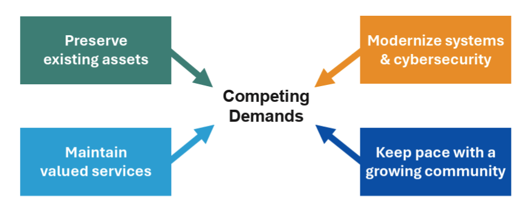
From Utilities, Israel emphasized that upcoming energy transitions require carefully balancing reliability, service, and affordability over multiple years. Ensuring reliability and resilience add costs, and Utilities remains under-resourced. For example, Loveland has budgeted to replace only about 0.15% of its water lines in 2026. The industry standard is 1%. This increases the chance of costly emergency repairs. Israel emphasized that, while we move through transitions, we make decisions with ratepayer impacts in mind.
Public Works Director Will Jones noted that the City’s focus is no longer on building new infrastructure but on maintaining what already exists. Much like your own home or vehicle, pavement, facilities, and other City assets require ongoing capital reinvestment. With no increases in funding, he outlined that Loveland’s assets will continue to deteriorate. Pavement condition will decline toward the industry average of poor.
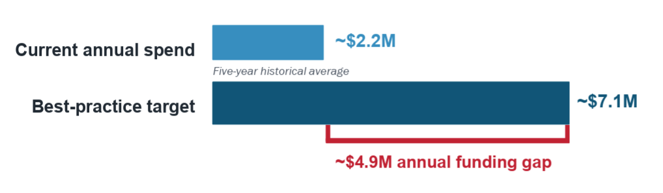
Jones also explained that the City has historically only budgeted $2.2 million annually (5 year average) for facility maintenance, and based on industry best practice, our target should be closer to $7.1 million, leaving a gap of nearly $4.9 million.
Community Placemaking Director Kara Kish spoke about the challenges facing the General Fund-supported service areas of parks, recreation, library, and cultural services. The challenge is not only maintaining community assets — it is sustaining the people, programs and access that make our public places valuable.
Staff work to identify and apply for grants or utilize Capital Expansion Fees to build or expand facilities, but this funding cannot be used to operate or maintain the City’s assets. Kish used the example of high-cost community park playgrounds to highlight the dependency on available General Fund dollars for replacement. During the question and answer portion of the workshop, Kish stated that approximately $1.5 to $2 million annually would be needed to keep up with the total asset replacement needs of the Parks Division.
City of Loveland Chief Information Technology Officer Dan Coldiron outlined budget pressures and the invisibility of IT risks. He mentioned that long-term planning is needed to build capacity, address single points of failure, and align cybersecurity investments with citywide risk.
Key pressures include:
- Infrastructure support below benchmark levels
- Limited redundancy, creating continuity and recovery risks
- Staff absences or turnover potentially disrupting public safety, utilities, financial systems, and emergency operations
- Growing cybersecurity demands
In summary, the City faces long term challenges that will influence future budget decisions. Continued planning and an intentional public engagement strategy will be essential as the City works to meet community needs with limited resources.
For more information, access the Budget Workshop meeting packet. Formal budget adoption takes place during City Council meetings this fall.
“This is an exercise in looking to the future,” said Acting Deputy City Manager and Chief Financial Officer Molly Elder at the start of the annual Budget Workshop. The City of Loveland’s annual Budget Workshop with City Council was Monday, Aug. 24, marking the first public discussion of the City Manager’s proposed 2027 City budget. Elder guided City Council through an overview of revenues, expenses, and long-term considerations ahead of the formal budget adoption in October. The meeting also provided City Council with an opportunity to ask questions about the proposed 2027 budget.
Operational and capital reductions made in 2025 served to keep the City of Loveland stable into 2027, but a key takeaway of the meeting was that the City’s budget is not yet healthy. In our financial outlook, many core community services operate under constrained budgets and investment in capital infrastructure is significantly behind, which several directors covered more in-depth toward the end of the meeting.
Elder stressed that reductions made in 2024 and 2025 served to stabilize the budget and additional budget reductions were not necessary for the 2027 budget.
General Fund Summary
2027 general fund revenues outlined in the Budget Workshop meeting packet, are forecast at about $136 million. Sales tax is still Loveland’s largest source of revenue, followed by property tax. The general fund is limited, and many essential services—like police, fire, parks, streets, City operations, and the library—compete for the same dollars.
About half of general fund expenses go towards paying staff. These are the employees who provide the day to day services residents and businesses rely on. Total expenses for 2027 are projected at roughly $141 million.
Capital projects include major repairs and replacements—like roofs, HVAC systems, roads, and facility upgrades. Only about $2.6 million is available for general fund capital projects in 2027, which is less than needed to keep existing assets in good condition.
Total funding for outside agencies is approximately $22 million. Loveland Fire Rescue Authority makes up most of this amount, receiving about $19.9 million. Many of these contributions are required by law or by contractual commitments.
City Council also reviewed funded and unfunded departmental requests; just over half of critical requests were included in the draft budget.
There was also a general fund forecast provided to Council, which addressed Centerra agreements that expire in 2029. When Centerra agreements expire, the City expects to receive about $4.1 million more in sales tax starting in 2029, and $2.2 million more in property tax starting in 2030. Even with these increases, the City does not expect this revenue to fully offset past losses. The City of Loveland saw a decline of -11.1% in 2024—or about $10.5 million annually—as a result of a change to its sales tax base.
Summary of Other Funds
Beyond the general fund, Loveland manages a variety of dedicated funds that, by law, can only be used for specific purposes.
These include:
- Enterprise funds, such as Golf, Solid Waste, Water, Wastewater, Electric and Communications, are funded primarily through user fees;
- Special revenue funds, such as Open Lands Sales Tax, Art in Public Places, and Lodging Tax, which are restricted by voter approval or state and federal law; and
- Internal service funds, which support organization-wide functions.
Utilities Director Sharon Israel presented the Utilities budget to City Council, explaining that our revenue for these services comes from customer bills and is reinvested to keep electric, water, wastewater, and communications systems safe, reliable, and sustainable. For these services, we are proposing a slight 1.17% decrease in their budget, moving from the 2026 adopted budget $269,478,767 to the 2027 proposed budget of $266,316,106.
Isreal emphasized the separation between ratepayer-funded operations and developer-funded growth projects. Across all utility services, the City faces rising infrastructure costs, increasing regulatory requirements, and the challenge of maintaining reliability while preparing for community growth.
Utility rate increases are proposed for 2027 to keep pace with higher costs of materials, treatment, energy, and equipment. All utility budget proposals have been unanimously supported by their advisory boards. The proposal includes a 7% increase in water rates, an 8% increase in wastewater rates, and a 6.63% increase in electric rates. Rates are adjusted annually to cover the cost of operating our City’s not-for-profit utilities.
Looking Ahead: The City Faces Challenges
The services the City provides, the condition of assets, and our ability to manage risks all depend on available funding. With limited resources and many competing priorities, several City directors stepped in to explain the key considerations we must keep in mind for the years ahead.

From Utilities, Israel emphasized that upcoming energy transitions require carefully balancing reliability, service, and affordability over multiple years. Ensuring reliability and resilience add costs, and Utilities remains under-resourced. For example, Loveland has budgeted to replace only about 0.15% of its water lines in 2026. The industry standard is 1%. This increases the chance of costly emergency repairs. Israel emphasized that, while we move through transitions, we make decisions with ratepayer impacts in mind.
Public Works Director Will Jones noted that the City’s focus is no longer on building new infrastructure but on maintaining what already exists. Much like your own home or vehicle, pavement, facilities, and other City assets require ongoing capital reinvestment. With no increases in funding, he outlined that Loveland’s assets will continue to deteriorate. Pavement condition will decline toward the industry average of poor.
Jones also explained that the City has historically only budgeted $2.2 million annually (5 year average) for facility maintenance, and based on industry best practice, our target should be closer to $7.1 million, leaving a gap of nearly $4.9 million.

Community Placemaking Director Kara Kish spoke about the challenges facing the General Fund-supported service areas of parks, recreation, library, and cultural services. The challenge is not only maintaining community assets — it is sustaining the people, programs and access that make our public places valuable.
Staff work to identify and apply for grants or utilize Capital Expansion Fees to build or expand facilities, but this funding cannot be used to operate or maintain the City’s assets. Kish used the example of high-cost community park playgrounds to highlight the dependency on available General Fund dollars for replacement. During the question and answer portion of the workshop, Kish stated that approximately $1.5 to $2 million annually would be needed to keep up with the total asset replacement needs of the Parks Division.
City of Loveland Chief Information Technology Officer Dan Coldiron outlined budget pressures and the invisibility of IT risks. He mentioned that long-term planning is needed to build capacity, address single points of failure, and align cybersecurity investments with citywide risk.
Key pressures include:
- Infrastructure support below benchmark levels
- Limited redundancy, creating continuity and recovery risks
- Staff absences or turnover potentially disrupting public safety, utilities, financial systems, and emergency operations
- Growing cybersecurity demands
In summary, the City faces long term challenges that will influence future budget decisions. Continued planning and an intentional public engagement strategy will be essential as the City works to meet community needs with limited resources.
For more information, access the Budget Workshop meeting packet. Formal budget adoption takes place during City Council meetings this fall.
-
City of Loveland hosts annual Budget Workshop with Council Aug. 24
Share City of Loveland hosts annual Budget Workshop with Council Aug. 24 on Facebook Share City of Loveland hosts annual Budget Workshop with Council Aug. 24 on X (formerly Twitter) Share City of Loveland hosts annual Budget Workshop with Council Aug. 24 on Linkedin Email City of Loveland hosts annual Budget Workshop with Council Aug. 24 linkOn Monday, Aug. 24, the City of Loveland's Finance team will hold its annual Budget Workshop with City Council, marking the first public discussion of the proposed 2027 City budget. The meeting is a study session, and the public is welcome to attend.
Budget Workshop
📆 Monday, Aug. 24, 9 a.m.
📍 City of Loveland Police and Courts Building, 810 E. 10th St.Following months of planning and review, the annual budget is typically adopted in October of the year before the budget takes effect. The proposed 2027 budget emphasizes maintaining current service levels and addressing the most urgent needs with the funding available for next year.
Here are some key highlights ahead of the workshop:- Strategic Budgeting: As part of the 2027 budget process, City leaders reviewed each department’s budget in detail to ensure available funding is directed to the highest priority services and needs.
- Revenue Generation: The proposed budget assumes moderate growth in the City’s revenue sources. The City will continue to closely monitor the economy and update its 2027 forecast of $135.6 million in revenue from sales tax, property tax, and other sources as conditions change.
- General Fund Increase: Proposed General Fund expenditures total approximately $141.1 million, a 5% increase over the 2026 adopted budget. The increase includes employee pay adjustments and targeted investments in public safety, staffing, legal services, technology and cybersecurity.
- Capital Improvement Projects (CIP): The proposed General Fund budget includes approximately $2.6 million for capital projects. This includes $2 million for major building maintenance, as well as playground maintenance, technology equipment, and public safety equipment. The amount remains well below the City’s repair and infrastructure needs.
- Limited Room for Unexpected Costs: After required reserves are set aside and expenses are subtracted from total revenues and a beginning fund balance, the proposed budget has less than $1 million in unassigned General Fund balance at the end of 2027. This leaves the City with limited flexibility to respond to unexpected expenses or new needs.
- No Additional Service Cuts: The proposed budget maintains current operating service levels.
Loveland remains a vibrant and valued community. Year after year, our community survey confirms how much residents appreciate City-funded services. City leadership is committed to maintaining Loveland as a great place to work and live—and to securing a financially strong future for all.
The Budget Workshop City Council agenda and packet are posted on CivicWeb.
On Monday, Aug. 24, the City of Loveland's Finance team will hold its annual Budget Workshop with City Council, marking the first public discussion of the proposed 2027 City budget. The meeting is a study session, and the public is welcome to attend.
Budget Workshop
📆 Monday, Aug. 24, 9 a.m.
📍 City of Loveland Police and Courts Building, 810 E. 10th St.Following months of planning and review, the annual budget is typically adopted in October of the year before the budget takes effect. The proposed 2027 budget emphasizes maintaining current service levels and addressing the most urgent needs with the funding available for next year.
Here are some key highlights ahead of the workshop:- Strategic Budgeting: As part of the 2027 budget process, City leaders reviewed each department’s budget in detail to ensure available funding is directed to the highest priority services and needs.
- Revenue Generation: The proposed budget assumes moderate growth in the City’s revenue sources. The City will continue to closely monitor the economy and update its 2027 forecast of $135.6 million in revenue from sales tax, property tax, and other sources as conditions change.
- General Fund Increase: Proposed General Fund expenditures total approximately $141.1 million, a 5% increase over the 2026 adopted budget. The increase includes employee pay adjustments and targeted investments in public safety, staffing, legal services, technology and cybersecurity.
- Capital Improvement Projects (CIP): The proposed General Fund budget includes approximately $2.6 million for capital projects. This includes $2 million for major building maintenance, as well as playground maintenance, technology equipment, and public safety equipment. The amount remains well below the City’s repair and infrastructure needs.
- Limited Room for Unexpected Costs: After required reserves are set aside and expenses are subtracted from total revenues and a beginning fund balance, the proposed budget has less than $1 million in unassigned General Fund balance at the end of 2027. This leaves the City with limited flexibility to respond to unexpected expenses or new needs.
- No Additional Service Cuts: The proposed budget maintains current operating service levels.
Loveland remains a vibrant and valued community. Year after year, our community survey confirms how much residents appreciate City-funded services. City leadership is committed to maintaining Loveland as a great place to work and live—and to securing a financially strong future for all.
The Budget Workshop City Council agenda and packet are posted on CivicWeb.
-
City of Loveland hosts Funds in Focus: Rates and Fees event, July 22
Share City of Loveland hosts Funds in Focus: Rates and Fees event, July 22 on Facebook Share City of Loveland hosts Funds in Focus: Rates and Fees event, July 22 on X (formerly Twitter) Share City of Loveland hosts Funds in Focus: Rates and Fees event, July 22 on Linkedin Email City of Loveland hosts Funds in Focus: Rates and Fees event, July 22 linkThe City of Loveland invites residents to attend its next Funds in Focus event to learn more about the City’s rates and fees on their Utility Bill. The event will take place on Wednesday, July 22, from 5:30 to 6:30 p.m. in the Rialto Theater’s Deveraux Room, located at 228 E. 4th St. This is a hybrid event, with an online attendance option, making it easy for community members to participate in the way that works best for them.
Attendees will hear from Acting Chief Financial Officer and Deputy City Manager Molly Elder, Public Works Director Will Jones, Utilities Director Sharon Israel and Utilities Deputy Director Shaundra Stoever.
The following information will be covered:
- How rates and fees are calculated each month
- How rates and fees support the City's capital improvement projects, maintenance, public health and more
- Why rates and fees are adjusted
- How the City uses these funds
Residents who wish to attend online need to register at go.lovgov.org/RatesFees. Registered participants will receive a confirmation email with details on how to join the online meeting.
Residents and business owners are encouraged to take part in various informative sessions hosted by the City of Loveland to better understand how public funds are allocated and how to stay involved in the budgeting process. Similar events are being planned for the rest of the year, leading up to October, when the City of Loveland approves its 2027 budget.
Stay informed
To learn more about the City of Loveland’s budget, where City tax dollars are invested in the community, and more, visit lovgov.org/budget.
The City of Loveland invites residents to attend its next Funds in Focus event to learn more about the City’s rates and fees on their Utility Bill. The event will take place on Wednesday, July 22, from 5:30 to 6:30 p.m. in the Rialto Theater’s Deveraux Room, located at 228 E. 4th St. This is a hybrid event, with an online attendance option, making it easy for community members to participate in the way that works best for them.
Attendees will hear from Acting Chief Financial Officer and Deputy City Manager Molly Elder, Public Works Director Will Jones, Utilities Director Sharon Israel and Utilities Deputy Director Shaundra Stoever.
The following information will be covered:
- How rates and fees are calculated each month
- How rates and fees support the City's capital improvement projects, maintenance, public health and more
- Why rates and fees are adjusted
- How the City uses these funds
Residents who wish to attend online need to register at go.lovgov.org/RatesFees. Registered participants will receive a confirmation email with details on how to join the online meeting.
Residents and business owners are encouraged to take part in various informative sessions hosted by the City of Loveland to better understand how public funds are allocated and how to stay involved in the budgeting process. Similar events are being planned for the rest of the year, leading up to October, when the City of Loveland approves its 2027 budget.
Stay informed
To learn more about the City of Loveland’s budget, where City tax dollars are invested in the community, and more, visit lovgov.org/budget.
-
April 14 Funds in Focus event explains development review and incentives
Share April 14 Funds in Focus event explains development review and incentives on Facebook Share April 14 Funds in Focus event explains development review and incentives on X (formerly Twitter) Share April 14 Funds in Focus event explains development review and incentives on Linkedin Email April 14 Funds in Focus event explains development review and incentives linkThe City of Loveland is hosting a Funds in Focus: Development & Incentives event from 5:30 to 6:30 p.m. on Tuesday, April 14, in the Devereaux Room upstairs at the Rialto Theater, 228 E. 4th St.
City of Loveland Deputy City Manager and Chief Financial Officer Brian Waldes will present information about the City's budget, and the City’s Development Services Director Bob Paulsen and Economic Development Director Marcie Willard will discuss development review, business incentives, and how fees and tax revenue collected from developers are reinvested in streets, parks, law enforcement, and other services impacted by growth.
“Our community has a lot of questions about how development works. This event is a great learning opportunity for anyone who has ever wondered how projects get approved, how incentives work, or who pays for the impacts of development,” Paulsen said.
This is a hybrid event with both in-person and online attendance options. Those who wish to attend online must register at go.lovgov.org/dev-funds. After registering, they will receive a confirmation email with information about how to join the online webinar. Both in-person and online attendees will have the opportunity to ask questions following the presentation.
Funds in Focus is an ongoing series of public events where community members can learn about the City of Loveland’s budget. Each event in the series dives into a different finance-related topic and features presenters from different City departments.
Stay informed
To learn more about the City of Loveland’s budget, where City tax dollars are invested in the community, and more, visit letstalkloveland.org/budget.
The City of Loveland is hosting a Funds in Focus: Development & Incentives event from 5:30 to 6:30 p.m. on Tuesday, April 14, in the Devereaux Room upstairs at the Rialto Theater, 228 E. 4th St.
City of Loveland Deputy City Manager and Chief Financial Officer Brian Waldes will present information about the City's budget, and the City’s Development Services Director Bob Paulsen and Economic Development Director Marcie Willard will discuss development review, business incentives, and how fees and tax revenue collected from developers are reinvested in streets, parks, law enforcement, and other services impacted by growth.
“Our community has a lot of questions about how development works. This event is a great learning opportunity for anyone who has ever wondered how projects get approved, how incentives work, or who pays for the impacts of development,” Paulsen said.
This is a hybrid event with both in-person and online attendance options. Those who wish to attend online must register at go.lovgov.org/dev-funds. After registering, they will receive a confirmation email with information about how to join the online webinar. Both in-person and online attendees will have the opportunity to ask questions following the presentation.
Funds in Focus is an ongoing series of public events where community members can learn about the City of Loveland’s budget. Each event in the series dives into a different finance-related topic and features presenters from different City departments.
Stay informed
To learn more about the City of Loveland’s budget, where City tax dollars are invested in the community, and more, visit letstalkloveland.org/budget.
-
Click here to play video
2026 Budget Funds in Focus: Rates & Fees
In this edition of Funds in Focus: Rates and Fees, staff share information about the City's utility bill and how rates and fees support services.
-
Click here to play video
2026 Budget Funds in Focus: Development & Incentives
This edition of Funds and Focus, held Tuesday, April 14, 2026, takes a look at development review, business incentives, and how fees and tax revenue collected from developers are reinvested in streets, parks, law enforcement, and other services impacted by growth.
-
Click here to play video
2025 Budget Funds in Focus: Parks and Recreation
The City of Loveland hosted Funds in Focus: Parks and Recreation on Wednesday, Dec. 17 with a goal of providing transparent information about the department budget, how decisions about budget are made, and to answer questions that the community has about the department budget and operations.
-
Click here to play video
Sales Tax in the City of Loveland
The City of Loveland boasts the region's lowest sales tax rate, despite offering more municipal services compared to other surrounding communities. Why does this matter? Sales tax is a vital lifeline for our City's General Fund, contributing significantly to our local government's revenue. By shopping locally, you're not just making a purchase. You're investing in Loveland's future.
-
Budget Fund Types (8.65 MB) (pdf)
-
Making Cents of the General Fund (7.55 MB) (pdf)
-
Sales Tax Comparison (649 KB) (pdf)
-
Local Property Tax Breakdown (82.3 KB) (pdf)
-
Regional Property Taxes (458 KB) (pdf)
-
Developer Fees and Taxes Information (8.89 MB) (pdf)
-
Tax Load Comparison (901 KB) (pdf)
-
Enterprise Funds Explored (3.3 MB) (pdf)
-
Funds in Focus Rates Fees FAQs (101 KB) (pdf)
-
Funds in Focus Parks Rec FAQs (119 KB) (pdf)
-
Funds in Focus Development and Incentives FAQs (89.5 KB) (pdf)
-
Sample Utility Bill (268 KB) (pdf)
-

-

-

-
-

Phone 970-962-3268 Email kimberly.overholt@cityofloveland.org
-
June 2026: Budget Review
2026-2027 Budget Information has finished this stageDepartments review anticipated 2026 revenues and expenditures, and evaluate potential budgetary impacts due to economic conditions, legal and regulatory changes, and other impacts.
-
Aug. 2026: Budget Workshop
2026-2027 Budget Information has finished this stageThe City’s Finance Department hosts a public budget workshop to help staff and Council consider options for the draft 2026 budget. The City, with input from the community and City Council, prioritize community goals and find a reasonable balance between costs and services.
-
Oct. / Nov. 2026: Budget Adoption
2026-2027 Budget Information is currently at this stagePer City Charter, the budget is presented for consideration during regular Council meetings. The budget is adopted after two consecutive City Council approvals, referred to as “readings.”
-
Dec. 2026: Budget Published
this is an upcoming stage for 2026-2027 Budget InformationAs the 2025 calendar year ends, the 2026 City budget is published on the City's website.